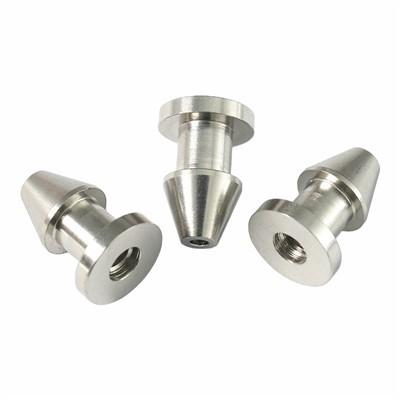
Hey there! I’m a supplier of aluminum turned parts, and today I wanna chat about the inspection standards for these parts. You know, in the business of making aluminum turned parts, quality control is super important. It’s what keeps our customers coming back and our reputation intact. So, let’s dive into what these inspection standards are all about. Aluminum Turned Parts
Dimensional Accuracy
First off, dimensional accuracy is a big deal. When we’re turning aluminum parts, we need to make sure they’re the right size. Every little measurement matters. We use precision tools like calipers, micrometers, and coordinate measuring machines (CMMs). Calipers are handy for quick measurements. You just open ’em up, put ’em around the part, and read the measurement. They’re great for getting a general idea of the size.
Micrometers, on the other hand, are more precise. They can measure down to really small increments, like thousandths of an inch. We use ’em when we need to be super accurate, especially for parts with tight tolerances. And then there are CMMs. These are like the high – tech wizards of measurement. They can map out the entire shape of a part in 3D, checking all the dimensions at once.
The tolerances for aluminum turned parts can vary depending on the application. For some parts that are used in consumer products, a tolerance of plus or minus a few thousandths of an inch might be okay. But for parts used in aerospace or medical equipment, the tolerances can be much tighter, sometimes even down to a few ten – thousandths of an inch.
Surface Finish
Another important inspection standard is the surface finish. The surface of an aluminum turned part can affect its performance and appearance. A rough surface can cause friction, which might lead to wear and tear over time. And if the part is visible in a finished product, a poor surface finish can make it look unprofessional.
We usually measure surface finish using a surface roughness tester. This device measures the peaks and valleys on the surface of the part. The result is usually given in units like microinches or micrometers. For most aluminum turned parts, we aim for a smooth surface finish. The specific requirements can vary, but generally, a surface finish of around 32 to 63 microinches is common for general applications.
There are different ways to achieve a good surface finish. One way is through the machining process itself. Using sharp cutting tools and the right cutting parameters can help reduce surface roughness. We can also use post – machining processes like polishing or buffing to improve the surface finish.
Material Quality
The quality of the aluminum material is also crucial. We start with high – quality aluminum alloys. There are different types of aluminum alloys, each with its own properties. For example, 6061 aluminum is a popular choice because it’s strong, lightweight, and easy to machine.
When inspecting the material, we look for things like impurities, porosity, and grain structure. Impurities can weaken the part and affect its performance. Porosity, which are small holes in the material, can also reduce the strength of the part. We use methods like metallographic analysis to check the grain structure. A proper grain structure is important for the mechanical properties of the part.
We also check the hardness of the aluminum. Hardness is a measure of how resistant the material is to indentation or scratching. We use a hardness tester to measure the hardness. The hardness of the aluminum should be within a certain range, depending on the application. If it’s too hard, the part might be brittle and prone to cracking. If it’s too soft, it might wear out quickly.
Geometric Tolerances
Geometric tolerances are about the shape and orientation of the part. This includes things like straightness, flatness, roundness, and perpendicularity. For example, if a part is supposed to be perfectly round, we need to make sure it actually is. We use tools like roundness testers to check the roundness of a part.
Straightness is important for parts that need to fit together properly. If a shaft is not straight, it can cause problems in a mechanical system. We can use straightedge and dial indicators to check the straightness of a part.
Flatness is crucial for parts that need to have a smooth, even surface. For example, a mating surface on a machine part needs to be flat so that it can seal properly. We use a flatness gauge to measure the flatness of a part.
Perpendicularity is about making sure that two surfaces are at a right angle to each other. This is important for parts that need to fit together in a specific way. We use a square or a digital angle gauge to check the perpendicularity.
Mechanical Properties
The mechanical properties of aluminum turned parts are also part of the inspection standards. These properties include things like tensile strength, yield strength, and elongation. Tensile strength is the maximum amount of stress a part can withstand before it breaks. Yield strength is the stress at which the part starts to deform permanently. Elongation is a measure of how much the part can stretch before it breaks.
We use a tensile testing machine to measure these properties. We take a sample of the part and pull it until it breaks, recording the stress and strain along the way. The results of these tests are important for ensuring that the part can perform its intended function.
Visual Inspection
Last but not least, visual inspection is an important part of the process. We look for things like scratches, dents, cracks, and burrs. Scratches can affect the appearance of the part and might also lead to corrosion over time. Dents can change the shape of the part and affect its performance. Cracks are a serious issue because they can cause the part to fail under stress.
Burrs are small, sharp edges that are left on the part after machining. They can be dangerous to handle and can also affect the fit of the part. We usually remove burrs using deburring tools, like files or brushes.
Visual inspection is often done by trained operators. They use their eyes and sometimes magnifying glasses to check the parts. It’s a simple but effective way to catch any obvious defects.
Why These Standards Matter
You might be wondering why all these inspection standards are so important. Well, for one thing, they ensure that the parts we supply meet the requirements of our customers. If a part doesn’t meet the dimensional accuracy or surface finish standards, it might not fit properly in the final product or might not perform as expected.
Meeting these standards also helps us maintain our reputation as a reliable supplier. Customers trust us to provide high – quality parts, and by following these inspection standards, we can make sure that we do just that.
Let’s Chat
Aluminum Turned Parts If you’re in the market for aluminum turned parts, I’d love to have a chat with you. Whether you have specific requirements for dimensional accuracy, surface finish, or any other inspection standard, we can work together to meet your needs. We’ve got the expertise and the equipment to produce top – quality aluminum turned parts. So, don’t hesitate to reach out and start a conversation about your procurement needs.
References
- ASME Y14.5 – 2018, Dimensioning and Tolerancing
- ASTM B221 – 19, Standard Specification for Aluminum and Aluminum – Alloy Extruded Bars, Rods, Wire, Profiles, and Tubes
- ISO 1302:2002, Geometrical Product Specifications (GPS) – Indication of surface texture in technical product documentation
Huizhou Quanyi Precision Hardware Products Co., Ltd.
We’re well-known as one of the leading aluminum turned parts manufacturers and suppliers in China, featured by quality products and good service. Please rest assured to buy customized aluminum turned parts made in China here from our factory. Contact us for more details.
Address: Building A10, 7th Floor, Zhongchuangyingke 5G Industrial Park, Zhonghan Industrial Park, Tonghu Town, Huizhou City
E-mail: info@qycncturning.com
WebSite: https://www.qycncturning.com/
