When I walk through our warehouse each morning, running my gloved fingers along the smooth, uniform surface of bright steel pipes waiting to ship, I always think about how every spec we control—from diameter to hardness—directly impacts the products our customers build. Last week, I got a call from a customer who’d rejected a batch of pipes because they bent too easily during CNC machining. “I didn’t realize hardness mattered this much,” he said, and his comment stuck with me. That conversation’s the whole reason I want to break down what bright steel pipe hardness actually means, how it affects real-world performance, and how we tailor it for different jobs as a supplier. Bright Steel Pipe
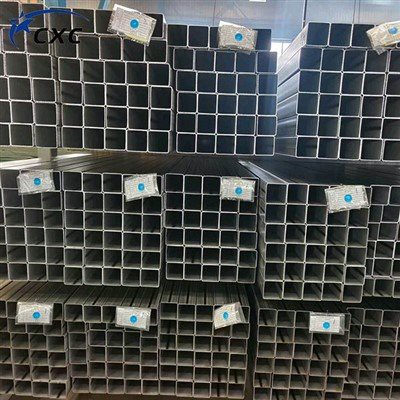
First, let’s clarify what “bright steel pipe” even is, because there’s a lot of confusion around the term. Unlike black steel pipe, which is made from raw steel with a dark, milled finish, bright steel pipe goes through an additional cold drawing or cold rolling process. That process pulls the steel through a die at room temperature, eliminating mill scale, tightening dimensional tolerances, and leaving a smooth, bright metallic surface. But that cold working also does something else: it changes the internal structure of the steel, and hardness is one of the most measurable results of that change.
Hardness, at its core, is a material’s resistance to indentation or deformation. For bright steel pipe, we test it using standardized scales—usually Brinell (HB) or Rockwell (HRC for harder materials, HRB for softer ones) because these are easy to implement in our in-house lab. It’s not a random number: that test tells us how the pipe will behave once it leaves our warehouse. If a pipe has a hardness of 150 HB, it’s going to react very differently than one with 220 HB, whether that’s when a fitter bends it, a machinist drills a hole, or a customer uses it to carry high-pressure fluids.
Let’s start with the most immediate impact: machinability. That’s what tripped up my last customer. Machinability refers to how easily a material can be cut, drilled, or shaped without dulling tools or producing rough edges. If bright steel is too soft (say, under 140 HB), it tends to “gum” when machined—metal shavings stick to drill bits or saw blades, creating uneven cuts and requiring more frequent tool changes. For a precision aerospace parts maker, that’s a huge problem; a single dull tool can ruin a $1,000 aluminum fitting. On the flip side, if the pipe is too hard (over 250 HB), it becomes brittle. Drilling a hard pipe can cause it to crack unexpectedly, and the tool bit might sheer off mid-cut, leading to costly delays. As a supplier, we’ve learned to calibrate hardness for machinability by application: for automotive components that need tight machining tolerances, we spec bright steel pipe at 160–190 HB. For heavy machinery parts that see repeated stress, we might bump it to 210–230 HB, but only after testing how it interacts with cutting tools.
Next, mechanical performance under load. Bright steel pipes are used in everything from scaffolding to hydraulic cylinders, so their ability to hold shape and resist deformation under pressure is non-negotiable. Harder pipes have higher tensile strength, which means they can handle more force before bending. Let’s take hydraulic hoses as an example: if a pipe’s hardness is too low, it can bulge or collapse under high pressure, leading to leaks that shut down construction equipment or factory machinery. We supply a lot of bright steel pipes to heavy equipment manufacturers, and for those, we target 200–240 HB. That hardness gives them the strength to withstand 3,000+ PSI of hydraulic pressure without warping, while still being flexible enough to fit into tight engine compartments.
But here’s the catch: hardness isn’t just about strength. It’s also tied to toughness—wait, that’s a common misconception. A lot of people think harder means stronger, but toughness is a material’s ability to absorb impact without cracking. If bright steel is too hard, it loses toughness. Think of a glass vase: it’s hard, but it shatters when dropped, whereas a rubber ball is softer but bounces. The same goes for steel pipes. For applications where the pipe might take impact—like guardrails, agricultural machinery, or playground equipment—we can’t go too hard. Those jobs need a hardness of 160–180 HB: enough to resist dents from minor impacts, but not so brittle that a stray rock or accidental collision causes a crack that leads to a failure. I once had an agricultural customer who tried using a harder pipe for fence posts; within a month, several posts cracked after being hit by a tractor, costing him time and money. We swapped it for a pipe with a slightly lower hardness, and he hasn’t had a problem since.
Corrosion resistance is another area where hardness plays a role, even if it’s less obvious. Wait, how? Bright steel’s smooth surface is inherently more corrosion-resistant than black steel, but hardness affects how that surface holds up. Softer pipes tend to have a more uniform, consistent finish after drawing, with fewer tiny surface imperfections that can trap moisture and lead to rust. Harder pipes, because of their more stressed internal structure, are more prone to microcracks on the surface if the drawing process isn’t perfectly controlled. Those microcracks act as entry points for corrosive agents like road salt or water, so for outdoor applications, we often recommend a slightly lower hardness (155–175 HB) and a post-drawing passivation step to seal the surface. For indoor applications like machine frames, where corrosion isn’t a major concern, a higher hardness is better for durability.
As a supplier, we don’t just pick a hardness number out of a catalog. We work with each customer to map their use case first. A customer making bicycle frames needs a pipe that’s lightweight, can be welded easily, and has enough strength to handle a rider’s weight and impact. We spec a bright steel pipe at 170–190 HB here: soft enough to weld cleanly without cracking, hard enough to avoid bending during a ride. A customer making low-pressure water pipes for a small construction site, on the other hand, needs something that’s cheap, easy to cut, and resists corrosion. We might go a bit softer here, around 150–165 HB, because it’s faster to machine and less likely to develop rust over time.
I also want to address a common mistake customers make: assuming higher hardness is always better. Last quarter, a construction manager came to us asking for the hardest bright steel pipe we had, saying “stronger is always safer.” But when we ran the numbers, his project involved scaffolding that needed to bend slightly under wind load to avoid collapsing in strong storms. A pipe at 280 HB would have been so brittle that a gust of wind could have snapped it clean, instead of letting it flex. We adjusted his order to 200 HB, and his team confirmed it worked perfectly once they tested a sample in a wind tunnel. That’s the value of working with a supplier that doesn’t just sell pipe, but understands how hardness interacts with performance.
Quality control is where we prove this. We test every batch of bright steel pipe for hardness before it leaves our facility, using three random samples per batch to ensure consistency. If a batch is too soft, we send it back for a re-drawing pass; if it’s too hard, we anneal it slightly to reduce the internal stress. We keep detailed records of every test, so if a customer ever has an issue, we can trace exactly how we processed the pipe, what its hardness was, and which application it was intended for. That level of transparency is what our customers trust, because they know we’re not cutting corners to fill an order.
Looking ahead, we’re seeing more demand for bright steel pipes in electric vehicle components, where weight and strength are both critical. For EV battery enclosures, the pipe needs to be hard enough to resist impacts from road debris, but soft enough to be shaped into tight, lightweight frames. We’ve been testing a new grade of bright steel with a hardness of 185 HB, which balances both, and early tests from EV manufacturers show it’s performing better than the standard grades they used before. That’s the kind of innovation that comes from understanding how hardness directly ties to the products that matter now.
At the end of the day, hardness is just a spec—but it’s a spec that determines whether a pipe works as intended, whether a customer’s project stays on schedule, and whether a product is safe and reliable. We don’t just sell bright steel pipe; we partner with our customers to choose the right hardness for their needs, test it rigorously, and deliver a product that stands up to real-world use.
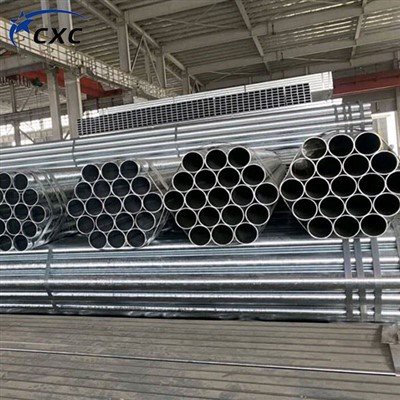
If you’re a manufacturer, fabricator, or project manager looking for bright steel pipe tailored to your performance requirements, don’t guess at what hardness you need. Reach out to our team to discuss your application, and we’ll help you find the right pipe that balances machinability, strength, toughness, and corrosion resistance. We’re here to make sure your project doesn’t face the same pitfalls as that last customer I helped, so you can focus on building great products.
Rectangular Steel Pipe References:
- ASM International. (2019). Metallurgy for the Non-Metallurgist (2nd ed.). ASM International.
- Diamond, D. (2021). “Machinability of Carbon Steels: The Role of Hardness and Microstructure.” Journal of Materials Processing Technology, vol. 292, p. 117085.
- Kalpakjian, S., & Schmid, S. R. (2020). Manufacturing Processes for Engineering Materials (7th ed.). Pearson.
- Noy, A. (2018). “Hardness Testing and Its Applications in Manufacturing Quality Control.” International Journal of Advanced Manufacturing Technology, vol. 98, no. 9–12, pp. 2677–2688.
- Society of Automotive Engineers. (2022). SAE Standard J405: Carbon Steel Pipe, Bright Drawn. SAE International.
Wuxi Chengxingchuang Metal Products Co., Ltd.
As one of the most professional bright steel pipe manufacturers and suppliers in China, we’re featured by quality products and good price. Please rest assured to buy cheap bright steel pipe for sale here from our factory. Customized orders are welcome.
Address: No. 8-2, Zhoujia Lane, Liangxi District, Wuxi City, Jiangsu Province, China
E-mail: 13961862735@163.com
WebSite: https://www.cxcsteeltube.com/
