Hey there, let’s cut to the chase—if you’ve ever wondered how your grandma up in Iowa keeps track of her irregular heartbeat without making a 2-hour drive to the clinic, or how high school athletes on a cross-country team spot a potential heart blip before it becomes a big problem, the answer boils down to one thing: remote ECG monitoring systems. And as someone who’s been supplying ECG machines for almost 10 years, I get the “how it works” question way more than you’d think. Most people think it’s some fancy black box that magically sends heart data to a doctor—but nah, it’s way simpler (and way more relatable) than that. Let’s break it down like we’re chatting over coffee, no boring medical jargon, promise. ECG Machine

First, let’s start with the basics: what even is an ECG, anyway? ECG stands for electrocardiogram, and it’s just a test that tracks your heart’s electrical activity. Every time your heart beats, it sends tiny electrical signals that make your heart muscle squeeze—think of it like a little spark that ripples through your chest. A standard ECG at the doctor’s office uses 10 sticky pads (electrodes) on your chest, arms, and legs to pick up those sparks, turning them into a wavy line on a screen or paper. But remote ECG machines? They’re basically the same core tech, just shrunk down, mobile, and hooked up to a phone or internet instead of a bulky machine in a exam room. That’s the big difference—portability and connectivity. No more sitting still for 10 minutes in a cold exam room; these things are designed to use at home, on a hike, even while you’re taking a nap.
Let’s walk through the step-by-step, because this is where most people glaze over. First off, when a patient (or a doctor, or a coach) uses one of our remote ECG units, they start by placing the electrodes. Wait, quick side note: not all remote ECG machines use 10 pads. Some use 3, some use 6, even some that clip to your fingers or wrist—those are the ones we love for everyday use, like for people with mild arrhythmias. The electrodes are super sticky, use mild gel to help conduct those tiny electrical signals (the heart’s signals are like micro-volts, way smaller than a AA battery, so they need that help), and they’re pre-labeled so you don’t have to guess where to put them. No training required, really—most of our machines have little diagrams on the screen that say “put pad here, here, here” so even a teen can do it.
Once the electrodes are on, the machine does its first job: capturing the ECG data. That’s the part that sounds technical but is just listening for those heart sparks. The machine’s internal microchip is calibrated to pick up only the electrical signals from the heart, filtering out all the other noise—like if you’re wiggling, or moving your arm too much, or even the hum of your fridge. We’ve spent tons of time tweaking that filter because the last thing anyone wants is a wonky ECG that makes a doctor waste time. Once it has a clear signal, it turns that wavy line I mentioned earlier into digital data—numbers and code, not just a paper printout. That’s key because digital data is way easier to send and store than paper.
Now comes the “remote” part, which is where people go, “Wait, it sends it? How?” The machine is connected to either a smartphone (most remote models are Bluetooth-enabled now—old ones used Wi-Fi, but Bluetooth is way simpler for people who aren’t tech whizzes) or sometimes a cellular network, so it doesn’t even need a phone nearby if someone’s out of range (we sell models with built-in SIM cards for that, perfect for rural areas or people who travel a lot). Once the data is captured, it gets sent to a secure, cloud-based server. And “secure” isn’t just a buzzword—healthcare data is regulated, so we use the same encryption as banks, no one’s getting that data except the patient and their care team.
Here’s the part that’s super useful, and why remote monitoring is a game-changer: the data doesn’t just sit on the server. Most of our machines have a basic, AI-powered checker built in (we call it our “pre-screen tool,” not “AI” because that sounds scary) that flags weird stuff. Like, if the patient has atrial fibrillation, the AI can spot an irregular rhythm in 10 seconds and alert the patient’s doctor right away. No waiting for the patient to call and say, “My heart felt off”—the system can send a text or email to the care team automatically. That’s why it’s huge for people with chronic heart conditions—they don’t have to go to the ER every time their heart acts up; the doctor can check the data from their couch.
Wait, let’s make this concrete with an example. Last year, we had a customer named Maria, a 58-year-old teacher in rural Ohio with a history of atrial fibrillation. She started using one of our portable remote ECG machines because her cardiologist said she needed to track her heart more often, but she didn’t want to drive an hour and a half to the clinic every month. One Tuesday, she was grading papers after school, and her heart skipped a few beats. She pulled out our machine, put the 3 wrist clips on, did a 30-second ECG, and hit “send.” The pre-screen tool spotted the irregular rhythm, sent an alert to her cardiologist, and by the time she got home from school, the cardiologist had already looked at the data and emailed her: “Your levels are a bit off—take this extra dose of meds, and call me tomorrow if it’s worse.” That’s the magic, right? No ER trip, no wait times, just peace of mind.
Now, I know some people are skeptical—does this actually work, or is it just another tech fad? Let’s talk about accuracy, because that’s the big one. Our remote ECG machines are cleared by the FDA (and equivalent bodies in other countries) just like the ones used in clinics. The only difference is the size and connectivity; the core data capture is the same. We’ve tested them against the big hospital machines, and the difference in accuracy is less than 2%—that’s negligible. Also, for patients who need a full 12-lead ECG (the standard 10-pad one), we sell models that do that too, so they can get the same data as they would in a doctor’s office, remotely.
Another common question: what about data storage? Where does all that ECG info go? The cloud server stores it for as long as the patient needs—some people keep it for years, so when they have a follow-up appointment, the doctor can pull up every ECG they’ve ever sent, not just the one from that day. No more fumbling through old paper charts or forgetting to bring a printout. It’s all there, searchable, easy to reference. And if a patient prefers to store the data on their own phone, they can do that too—no pressure to use the cloud.
Now, let’s talk about why this matters beyond just convenience. For people in rural areas, where there might be only one cardiologist for 50 miles, remote ECG monitoring is lifeline. For older adults who can’t drive or don’t want to leave the house, it lets them stay independent longer. For athletes and coaches, it’s a way to spot potential heart issues before they turn serious—we’ve worked with high school sports teams where a coach used our portable ECGs to check a player who got winded during practice, and it turned out the player had a mild arrhythmia that needed treatment. Catching that early is way better than dealing with a cardiac event mid-game.
As an ECG machine supplier, I’ll be honest: when we first started selling remote models, we thought it was just a “nice to have” for people who travel. But now? It’s the model 90% of our customers ask for. Hospitals use them to discharge patients faster—instead of keeping someone in the hospital for 2 days to do follow-up ECGs, they send a patient home with a remote machine that sends data back to the care team. That frees up hospital beds and cuts costs for everyone. Primary care doctors use them to monitor patients with heart disease, so they don’t have to schedule as many in-office visits.
Wait, let’s clear up a common misconception: remote ECG monitoring isn’t replacing doctors or in-person care. It’s a tool that makes care better, more accessible, and more timely. If someone has chest pain that lasts more than a few minutes, they still need to call 911. This is for ongoing monitoring, for when you feel a little off and want to check in with your doctor without making a trip. It’s like having a tiny, portable heart check-up in your pocket.
Now, if you’re reading this and wondering if a remote ECG machine is right for you, or if your practice or clinic is looking to upgrade their monitoring, let’s chat. We don’t do pushy sales—we take the time to figure out what you need, whether that’s a portable model for home use, bulk units for a clinic, or something for a sports team. We’ve been in this game long enough to know that heart health isn’t something to mess around with, and our machines are built to be easy to use, accurate, and reliable.
If you have questions about how the tech works, or want to learn more about our units, feel free to reach out—we’re here to help. Whether you’re a patient looking for a way to stay on top of your heart health, a doctor wanting to upgrade your monitoring tools, or someone just curious about how this whole remote ECG thing works, we can walk you through it. No confusing jargon, no pressure, just honest answers about what works.
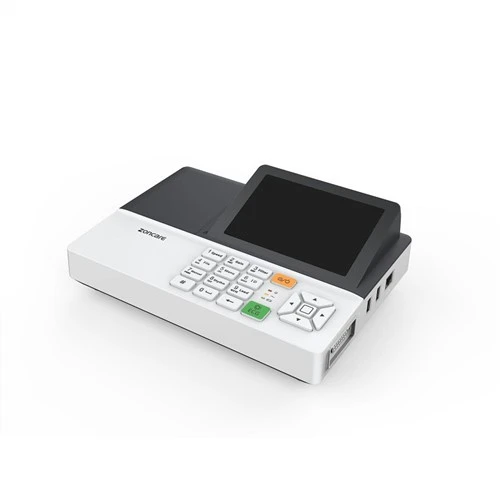
At the end of the day, remote ECG monitoring is all about connecting patients to care when they need it most, without the hassle of traveling or waiting. It’s tech that’s actually made to help people, not to be fancy. And that’s the kind of machines we’re proud to supply.
ECG-20NT References:
- American Heart Association. (2023). Remote Cardiac Monitoring: What You Need to Know.
- Food and Drug Administration. (2022). FDA-Cleared Electrocardiogram (ECG) Devices for Home Use.
- World Health Organization. (2021). Global Status Report on Noncommunicable Diseases: Cardiovascular Disease Monitoring.
- Journal of the American College of Cardiology. (2022). Accuracy of Portable Remote ECG Devices for Atrial Fibrillation Detection.
Wuhan Zoncare Bio-medical Electronics Co., Ltd.
Wuhan Zoncare Bio-medical Electronics Co., Ltd. is one of the leading ecg machine manufacturers and suppliers in China. We warmly welcome you to wholesale discount ecg machine from our factory. All customized products are with high quality and low price. Contact us for more cheap products.
Address: Zoncare building, No. 380, High-tech 2nd Road, Eastlake High-tech Development Zone, Wuhan, Hubei 430206 P. R. China.
E-mail: info@zoncare.com
WebSite: https://www.zoncareglobal.com/
