Hey there! I’m a supplier of special transformers, and today I wanna chat about the magnetic saturation characteristics of these special transformers. Special Transformer
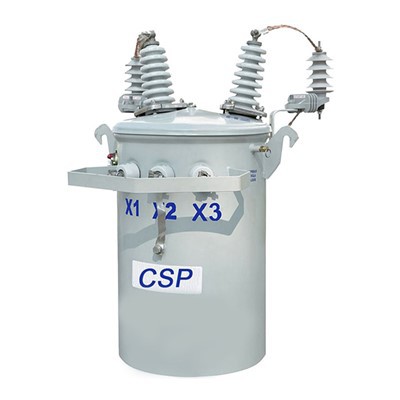
First off, let’s understand what magnetic saturation is. In a transformer, the core is made of a magnetic material. When we apply an alternating current (AC) to the primary winding, it creates a magnetic field in the core. As we increase the current, the magnetic field in the core also gets stronger. But there’s a limit. When the magnetic field reaches a certain point, the core can’t hold any more magnetic flux. That’s when magnetic saturation occurs.
For special transformers, the magnetic saturation characteristics can be quite different from regular transformers. Special transformers are designed for specific applications, like in high – frequency circuits, or for use in harsh environments. These unique requirements mean that their magnetic saturation behavior is also unique.
One of the key factors affecting magnetic saturation in special transformers is the core material. Different core materials have different saturation points. For example, some special transformers use ferrite cores. Ferrite has a relatively low saturation flux density compared to some other materials like silicon steel. This means that ferrite – core special transformers can reach saturation at lower magnetic fields. On the other hand, silicon – steel cores can handle higher magnetic fields before saturating. So, depending on the application, we choose the core material carefully.
Another factor is the design of the transformer. The number of turns in the windings, the shape of the core, and the size of the core all play a role in magnetic saturation. If a special transformer has a large number of turns in the primary winding, it can generate a stronger magnetic field for a given current. But if the core is too small, it might reach saturation more easily.
Let’s talk about the implications of magnetic saturation in special transformers. When a transformer saturates, its performance can be seriously affected. The inductance of the transformer drops significantly. This means that the transformer can’t transfer energy as efficiently as it should. In some cases, it can even lead to overheating. Overheating is a big no – no because it can damage the transformer and reduce its lifespan.
In high – frequency applications, magnetic saturation can cause even more problems. The high – frequency signals can cause rapid changes in the magnetic field. If the transformer saturates, it can distort the signals. This is a huge issue in applications like communication systems, where signal integrity is crucial.
Now, let’s look at how we can deal with magnetic saturation in special transformers. One way is to choose the right core material and design the transformer properly. We need to make sure that the core can handle the expected magnetic fields without saturating. This might involve using a larger core or a core material with a higher saturation flux density.
We can also use techniques like magnetic shielding. Magnetic shielding can help reduce the external magnetic fields that might cause the transformer to saturate. By using a shielding material around the transformer, we can protect it from unwanted magnetic interference.
Another approach is to monitor the transformer’s performance. We can use sensors to measure the magnetic field in the core. If the magnetic field approaches the saturation point, we can take action, like reducing the current or adjusting the load.
As a special transformer supplier, I’ve seen firsthand how important it is to understand these magnetic saturation characteristics. We work closely with our customers to design transformers that meet their specific needs. Whether it’s for a high – frequency application or for use in a tough environment, we make sure that our transformers are optimized to avoid magnetic saturation.
If you’re in the market for special transformers, it’s crucial to consider these magnetic saturation characteristics. You don’t want a transformer that’s going to saturate easily and cause problems down the line. That’s where we come in. We have the expertise and the resources to design and manufacture high – quality special transformers that can handle the magnetic fields they’ll be exposed to.
So, if you’re looking for a reliable special transformer supplier, don’t hesitate to reach out. We’re here to help you find the perfect transformer for your application. Whether you need a transformer for a small – scale project or a large – scale industrial application, we’ve got you covered.

Let’s work together to ensure that your special transformer performs at its best and doesn’t run into any magnetic saturation issues. Contact us today to start the conversation about your transformer needs.
Conventional Power Transformer References:
- "Transformer Design Handbook" by Colonel W. T. McLyman
- "Magnetic Materials and Their Applications" by E. C. Snelling
Nantong Yawei New Energy Technology Co., Ltd.
As one of the most professional special transformer manufacturers and suppliers in China, we’re featured by quality products and good service. Please rest assured to wholesale durable special transformer made in China here from our factory. Customized orders are welcome.
Address: Room 28-101, Building 27 and 28, No.333 Kaiyuan Avenue, Sunzhuang Subdistrict, Hai’an City, Nantong City, Jiangsu Province, China
E-mail: admin@nantongyawei.com
WebSite: https://www.nantongyawei.com/
