Hey everyone! Ever had that random thought staring at a roll of basic filter paper in your lab drawer—could this stuff actually handle radioactive particles? I work as a filter paper supplier, and let’s be real, this question pops up way more than you’d think—whether it’s from a nuclear decommissioning tech who forgot their specialized filters, a high school science fair kid curious about mini-radioactivity tests, or even a small hospital lab trying to trim their filter budget. Today, we’re breaking this down like we chat with our regular clients over a iced coffee, no stuffy jargon, just the straight facts. Filter Paper
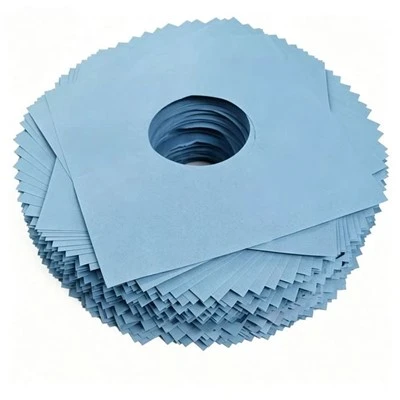
First off, let’s get one thing straight: radioactive particles aren’t some weird, untouchable space garbage—they’re just tiny bits (think nanometer to micrometer sized) of unstable elements like uranium, cesium, or cobalt that spit out radiation as they break down. Filter paper, at its core, is just a mat of interwoven cellulose fibers, right? So the basic question is: does that mesh of tiny holes catch these tiny radioactive bits, and, maybe more importantly, is it safe to use?
Let’s start with the filtering part. If you’ve used filter paper for coffee, you know it catches grounds—those are way bigger than most radioactive particles. Your average standard qualitative filter paper (the stuff you buy for basic lab tests, like separating solids from liquids) has a pore size between 10 and 100 micrometers. Wait, most radioactive particulate matter you’d encounter in real labs is way smaller—like 0.001 to 1 micrometer, especially from things like radon daughters or dissolved radioactive salts that have formed tiny particles. So standard filter paper’s holes are too big to catch most of those. Even quantitative filter paper, which has smaller, more uniform pores (down to 2.5 micrometers), still won’t trap the tiniest radioactive particles. Those will just slip right through like sand through a sieve with a hole too big.
But hold on—what if you’re filtering a slurry, not a gas? Like, if you’re dealing with liquid waste from a small lab that has suspended radioactive particles, not airborne ones? Then it’s a different story. Let’s say you’re filtering relatively large radioactive chunks, like leftover uranium ore particles that are 5+ micrometers. Regular filter paper will totally catch those. We’ve had a few small university labs reach out last year, right? They were doing a tiny research project on uranium leaching, and they couldn’t swing the cost of specialty glass fiber radioactive filters for their small batch tests. They used our standard grade 1 filter paper, and it worked perfectly for their suspended particles—no leaks, no clogging fast enough to mess with their results. The key here is matching the filter’s pore size to your radioactive particle size. If your particles are big enough, standard filter paper does the job. If they’re tiny, you either need a denser filter or a two-step filtration setup, but let’s be real, most people don’t have that lying around.
Now the big, scary part: safety. This is where filter paper has a major limitation that people often miss. When you filter radioactive stuff, you’re dealing with contamination. Radioactive particles stick to the filter fibers, right? So if you use regular filter paper, can you dispose of it safely? Let’s break that down. If the radiation is low-level—like the kind from a smoke detector’s americium, or a small sample of a radioisotope used for teaching—then the filter paper with the trapped particles can usually be disposed of as low-level radioactive waste, as long as you follow local regulations. But if it’s high-level, like spent fuel or large samples of cobalt-60, standard filter paper won’t hold up. For one thing, cellulose can degrade when exposed to high radiation over time, breaking down the fibers and releasing particles back into the air or liquid. Also, if you need to handle the filter after filtering, it’s prone to tearing—way more than specialty glass fiber or membrane filters. Imagine fumbling with a filter that’s loaded with radioactive particles and it tears, sending those bits flying. That’s a recipe for a bad day, trust me, I’ve heard of that happening at smaller labs that cut corners.
Wait, but what about filter paper designed for harsher conditions? We sell a line of mixed cellulose ester (MCE) filter paper—they’re denser, have super uniform small pores, and are more resistant to tears than regular cellulose. We’ve found that these work for slightly smaller radioactive particles, down to around 0.2 micrometers, and they’re a bit more stable under low radiation. But even MCE filters aren’t made for long-term exposure to high levels of radiation. They’ll start to yellow and break down after a few hours with high-energy radiation, so if you need to leave a filter sitting with radioactive material for more than a quick filtration, this isn’t it.
Let’s also talk about the common myths here. A lot of people think “radioactive” means you need a super fancy filter costing hundreds of bucks. No, that’s not always true. If you’re doing a low-volume, short-term test with low-level radioactive material, standard filter paper will work for catching large to medium particles, and it’s way cheaper than specialty filters. We had a nuclear decommissioning crew reach out a few months back—they had a small spill of contaminated coolant with relatively large uranium particles, and they needed something quick that wouldn’t cost them a fortune for a small cleanup. Our grade 2 filter paper did the trick; it caught all the visible radioactive particles, and they disposed of it properly as low-level waste. That’s the sort of real-world use case people don’t talk about enough—small, low-stakes jobs where you don’t need top-of-the-line equipment.
Another myth: you can use filter paper for airborne radioactive particles. Nope, not even a little. Standard filter paper is way too porous to catch tiny airborne radioactive particles, and those particles would just pass right through. If you’re dealing with radioactive aerosols, you need a high-efficiency particulate air (HEPA) filter, not regular filter paper. Trying to use filter paper for airborne stuff is like using a kitchen strainer to catch dust—pointless, and it won’t protect you from inhaling radiation.
Now, the caveats that everyone should know before they grab that roll of filter paper from their stockroom. First, always check the particle size first. Pull a sample of your radioactive material and measure the particles (even a cheap lab microscope will work) to make sure your filter’s pore size is smaller than the particles. If you don’t do that, you’re wasting time and risking contamination. Second, never use regular filter paper for high-level radiation. If you’re working with isotopes that have a half-life under a year and emit high-energy gamma rays, stick to the specialized stuff designed for radiation exposure. Regular cellulose will break down, and the radiation can even damage the paper’s structure, making it leak. Third, disposal is key. Make sure whatever filter you use is labeled as radioactive waste, and follow your local guidelines. Don’t just toss it in the trash—that’s a huge no-no, and we always remind our clients of this, even the small ones.
So to wrap this up, the answer to “can filter paper be used for filtering radioactive particles?” is: sometimes, depending on the job. If you’re dealing with low-level radiation, relatively large suspended particles in liquid, and a short filtration time, regular filter paper works just fine. If you’re dealing with tiny particles, airborne radiation, or high-level radioactive material, you’ll need something better, but filter paper can still be a budget-friendly option for the right small jobs.
At the end of the day, we’re a filter paper supplier, and we love helping our clients figure out the best fit for their needs. If you’re working on a radioactive project—whether it’s a small lab test, a cleanup, a school science project, whatever—and you’re not sure if your current filter will work, hit us up. We’ve got years of experience working with research labs, decommissioning crews, and small facilities, and we can hook you up with the right filter for your specific use case, no overcharging for stuff you don’t need. Just reach out to talk through what you’re working on.
Wool Paper References
- National Research Council. (2008). Radionuclide Separation Methods for Environmental and Biological Samples. National Academies Press.
- International Atomic Energy Agency. (2018). Manual on Disposal of Low-Level Radioactive Waste. IAEA Publications.
- ASTM International. (2021). Standard Test Method for Pore Size Characteristics of Filter Media by Bubble Point Method. ASTM E1294-21.
- Occupational Safety and Health Administration. (2020). Radiation Protection in Laboratories. OSHA 3363-10N.
Shanghai Rongying Industrial Co., Ltd.
As one of the most professional filter paper manufacturers and suppliers in China, we’re featured by quality products and good price. Please rest assured to wholesale customized filter paper from our factory. If you have any enquiry about quotation and free sample, please feel free to email us.
Address: Jiahua Business Center C building 204 room, No.808 Hongqiao Road,Xuhui District,Shanghai,China
E-mail: info@shryspecialtypaper.com
WebSite: https://www.woolpaper.com/
