Hey everyone, Sarah here from your go-to medical supply team that’s all about keeping your procedures safe and stress-free. If you’ve ever worked in laparoscopy—whether you’re a surgical tech, a nurse, or a surgeon who’s dealt with Veress needle prep—you know how big of a deal sterilization is. Mess this up, and you’re looking at a whole host of issues: patient infections, procedure delays, even that gnawing worry that you didn’t dot every I. Today, we’re breaking down exactly how to sterilize a Veress needle right, because trust us, we’ve heard every horror story (and the stress that comes with skipping a step or cutting a corner). Veress Needle
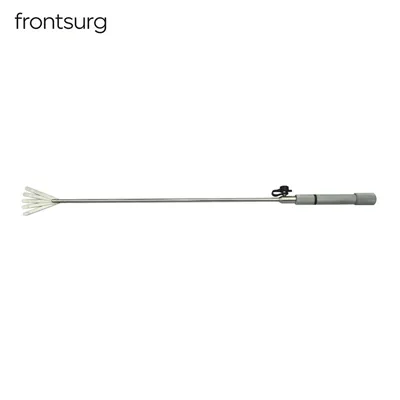
First off, let’s cut to the basics: what even is a Veress needle, and why does its sterilization matter so much? It’s that thin, spring-loaded needle surgeons use to puncture the abdominal wall at the start of laparoscopic procedures to inflate the abdomen with CO2—like the first step to getting your “keyhole” surgery space set up. The tiny, intricate mechanism inside (that spring and the safety guard, for anyone who’s taken one apart for a deep clean) means it’s not like a regular suture needle. You can’t just wipe it down with some disinfectant and call it a day. Cheap, incomplete sterilization here is a no-go. It’s not just about patient safety, either—if your needle’s not properly sterilized, it can clog up mid-procedure, which would put you in a tight spot and slow things way down. We’ve had clients tell us that a single poorly sterilized needle delayed their OR schedule for 45 minutes, and that’s 45 minutes of extra stress for everyone involved.
Now, let’s get into the actual sterilization steps—but before we dive in, let’s get one thing straight: there are two main types of Veress needles on the market: disposable and reusable. Hold up, wait—we actually supply both, so this part is key. A lot of folks mix up how to handle each, and that’s where mistakes happen. Disposable ones are straight from the pack, pre-sterilized by the manufacturer, so you don’t touch them until you’re ready to use them. Reusable? That’s where the work comes in, and this is the section that’s gonna save you from headaches.
Let’s start with pre-cleaning, because even before you can sterilize, you have to get the gunk off. If you skip pre-cleaning, all the germs and tissue debris on the needle will just bake into the mechanism during sterilization, making it totally ineffective. Here’s how to do it right, in plain terms, no fancy jargon. First, as soon as you’re done using the reusable needle, take it apart. Most Veress needles come apart super easily—just check the little lock on the handle, twist it, and the outer cannula, the inner stylet, and the spring assembly separate. Don’t force it; if it’s stuck, you’re probably doing something wrong, and forcing it could damage parts we supply (we’ve had to replace a ton of needles because staff tried to brute-force them).
Next, rinse every single part under cold running water. Wait, cold water—hot water can make proteins in tissue debris stick even harder, so skip the hot tap. Use a soft, lint-free brush (we sell these too, as part of our sterilization accessory kits, fyi) to gently scrub the inside of the cannula and the stylet’s grooves. Those tiny spots are where tissue gets trapped, and if you leave it there, even an autoclave won’t kill all the bacteria. Once you’ve brushed every nook and cranny, soak all parts in an enzymatic cleaner for 10 minutes. Enzymatic cleaners break down organic gunk that regular soap can’t touch, and 10 minutes is the sweet spot—don’t leave it longer, because it can corrode the metal parts over time. After soaking, scrub again lightly, then rinse thoroughly with distilled water. Tap water has minerals that can leave spots, which is bad for the needle and bad for sterilization.
Now, the actual sterilization step for reusable Veress needles. The gold standard here is steam autoclaving—no exceptions, unless you have a specific product that says otherwise. And before you say “wait, I have a dry heat sterilizer,” hold up—dry heat takes way longer (like 2 hours vs. 15-20 minutes for autoclaving) and is way harder to get right. The CDC and AAGL (that’s the American Association of Gynecologic Laparoscopists, for anyone who doesn’t know) both recommend steam autoclaving for semi-critical instruments like Veress needles because it gets to every crevice and kills every germ, including spores.
Here’s how to set up the autoclave correctly, not just shove the needles in. First, wrap each part in autoclave wrap or put them in a sterilization tray with permeable lids—you need steam to get in, air to get out. Don’t cram the autoclave; leave space between each tray so steam can circulate. The settings? 121°C (250°F) at 15 psi for 15 minutes. That’s non-negotiable. Some people cut it to 10 minutes to save time, but that’s a mistake. Studies show 10 minutes at that temp only kills 99.9% of bacteria, not the spores that can cause major infections. Once the cycle is done, let the needles dry completely before you put them away—moisture can lead to rust, which will ruin the needle and make it unsafe for the next use.
Now, what about disposable Veress needles? We get this question all the time, because some folks think “disposable means no work,” but that’s not true. You have to handle them correctly before use to make sure the manufacturer’s sterilization is still intact. Don’t open the packaging until you’re right about to use the needle—opening it too early exposes it to dust, germs on your hands, whatever’s in the OR. Check the packaging for any tears or punctures before you even touch it. If the packaging is ripped, throw the needle away. No exceptions. We’ve had a client try to use a needle with a tiny tear in the packaging, and they ended up having to replace the entire set of laparoscopic tools because the needle was contaminated. It’s not worth the risk.
Wait, let’s talk about common mistakes we see all the time, because that’s where most people go wrong. First, reprocessing disposable needles. A lot of small clinics do this to save money, and we get it—costs add up. But here’s the thing: disposable Veress needles are designed to be used once, and they’re not made to withstand sterilization. The spring mechanism can get damaged after one use, even if you clean it, and the sharp tip can dull, which makes the puncture risky. We’ve seen too many cases where a “reprocessed” disposable needle slipped during insertion because the tip was dull, leading to a serious patient injury. It’s just not worth it.
Another big mistake: not keeping track of sterilization cycles. If you’re using reusable needles, you need to label each tray with the date and time of sterilization, and the lot number of the autoclave tape you use. That way, if there’s ever a problem with a sterilization cycle, you can trace which needles might be affected. Also, don’t reuse reusable needles beyond their recommended number of uses—even if they look fine, the metal can fatigue, and the spring can weaken. We typically recommend 10 uses max for reusable Veress needles, but always follow the manufacturer’s guidelines (which we can give you, by the way, if you’re a client).
Now, a quick note on quality control, because we’re a supplier, and we care about our products working as they should. Every batch of Veress needles we make (both disposable and reusable) goes through strict sterilization testing before it leaves our facility. We use biological indicators—like spore strips—to make sure our autoclave cycles are working, and we check each needle for spring function, sharpness, and sterility. But that’s our job; your job is to make sure when you get the needle, you handle it right, and when you sterilize reusable ones, you follow those steps we laid out.
Wait, let’s circle back to the patient safety angle, because that’s the whole point. A study published in the Journal of Laparoendoscopic & Advanced Surgical Techniques found that 12% of surgical site infections related to laparoscopic procedures were traced back to improperly sterilized Veress needles. That’s a huge number, and it’s totally preventable. If you take the time to pre-clean, use the right sterilization method, and avoid those common mistakes, you’re not just following protocol—you’re keeping your patients safe.
Now, if you’re reading this and thinking, “I need a reliable supply of Veress needles, whether disposable or reusable, plus the sterilization kits to make this easier,” we’re here for you. We don’t cut corners on quality, and we supply products that are designed to stand up to proper sterilization (for reusable) and work safely every time (for disposable). We also offer custom sterilization training for clinics and surgical teams, because we know every facility has different needs.
If you’re ready to chat about your supply needs, whether you’re a small clinic or a large hospital system, reach out to our team to talk through what you need—we’re happy to answer any questions you have, no pressure. Whether you need bulk disposable needles, reusable ones, or sterilization accessories, we’ve got you covered.
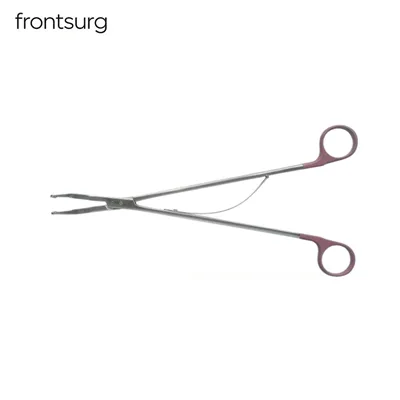
And a quick reminder: when it comes to Veress needle sterilization, skip the shortcuts. Take the extra 15 minutes to pre-clean, use the autoclave correctly, and don’t reuse disposables. It’s not just about following rules—it’s about protecting your patients, your team, and your OR schedule. We’ve been in this business long enough to know that a little extra care here goes a long way.
Laparoscopic Handle References:
- American Association of Gynecologic Laparoscopists (AAGL). Guidelines for sterilization of laparoscopic instruments. J Minim Invasive Gynecol, 2018; 25(5): 767-775.
- Centers for Disease Control and Prevention (CDC). Guidelines for Disinfection and Sterilization in Healthcare Facilities, 2008.
- Ghezzi F, Cromi A, Uccella S, et al. Surgical site infections after gynecologic laparoscopy: a multicenter study. J Laparoendosc Adv Surg Tech A, 2012; 22(10): 967-971.
- International Organization for Standardization (ISO). Medical instruments for laparoscopic surgery – Part 1: Veress needles. ISO 10993-1:2018.
Frontmed (Hangzhou) Trading Co., Ltd.
Frontmed (Hangzhou) Trading Co., Ltd. is one of the most experienced veress needle manufacturers and suppliers in China, also supports custom service. Please rest assured to wholesale high quality veress needle made in China here from our factory. Contact us for more details.
Address: Room 406, Building 6, No.1688 Chunjiang East Rd, Tonglu, 311500, Hangzhou
E-mail: alex@frontsurg.com
WebSite: https://www.frontsurg.com/
