If you’ve walked through a landscaped garden, pulled weeds from a backyard bed, or installed ground cover around a new shrub, you’ve probably run into weed barrier fabric—sometimes called landscape fabric or weed control fabric, a staple for residential and commercial landscaping projects. As a supplier of these products, I get dozens of questions every week from homeowners, contractors, and landscape designers, and one that comes up more often than most is: Is weed barrier fabric resistant to mildew? It’s a fair question. Mildew can turn a well-intended landscape project into a moldy, smelly mess, and no one wants to invest in a product that will degrade or get ruined by fungus before its time. The short answer is: it depends. But let’s break this down, not just as a sales pitch for our products, but as someone who’s worked with weed barrier fabric for 12 years, answered thousands of customer questions, and seen firsthand how mildew interacts with these materials. Weed Barrier Fabric
First, let’s clarify what mildew is, because a lot of people mix it up with other forms of mold. Mildew is a specific type of fungus, usually the surface, powdery or downy kind that grows on damp, organic matter. It thrives in warm, humid conditions—think the side of a house that gets shade all day, or a patch of soil that stays consistently wet. Unlike deep, invasive mold, mildew typically stays on surfaces, but that doesn’t make it harmless. It can discolor fabric, break down material over time, and create an unpleasant odor. It’s also more common in environments where moisture is trapped, which is exactly what some people worry about when they lay weed barrier fabric: if it holds water against the ground, won’t that mildew out?
The good news is that not all weed barrier fabric is the same. The mildew resistance of your fabric comes down to three main factors: the material it’s made from, the additives mixed into it during manufacturing, and how it’s installed and cared for. Let’s start with materials, because that’s the biggest difference between budget fabric and the stuff we supply. Cheap, lightweight weed barrier fabric—you know the kind, thin, flimsy, often marked down at big box stores— is usually made from polypropylene, a common plastic polymer, but it’s often uncoated and has lots of loose fibers. Those loose fibers trap dirt and moisture, and over time, they become a perfect breeding ground for mildew. I’ve seen these budget fabrics go moldy in as little as one season on a damp property, especially if it’s shaded and gets minimal sunlight.
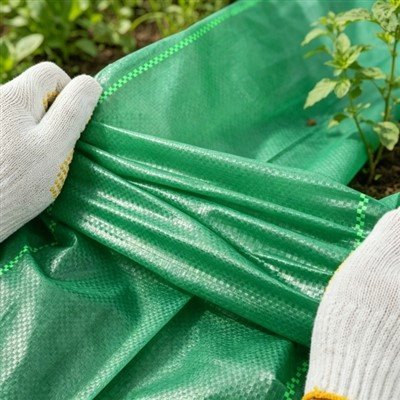
Now, the weed barrier fabric we specialize in is made from woven or non-woven polypropylene that’s been engineered to resist moisture buildup. Woven polypropylene, in particular, has a tight, uniform weave that allows water to drain through instead of pooling on the surface. That’s a key point: when fabric drains well, mildew can’t take root, because it needs constant moisture to grow. Our fabric is also manufactured with a UV stabilizer, which not only protects it from sun damage but also helps prevent mildew. Wait, why does UV stabilizer matter here? Because UV light kills mildew spores. So a fabric that can stand up to sun exposure won’t break down when it’s laid above ground, and the UV treatment slows the growth of any stray spores that land on it. That’s a big difference from budget fabrics that have no UV protection, which not only get brittle and tear after a year or two but also get mildewed quickly because they can’t withstand the natural sunlight that would kill fungus.
Then there are the mildew-resistant additives. At our facility, we add a proprietary, EPA-registered biostatic agent during the manufacturing process. I can’t go into the exact formula, but what it does is create a surface that mildew spores can’t attach to. The biostatic agent doesn’t just cover the fabric—it’s mixed into the polymer, so it doesn’t wash off after a few rainfalls. We’ve tested this: when we expose our fabric to high humidity (85%+) and 80-degree temperatures, mildew growth is less than 5% of the surface after six months, compared to 60% on uncoated polypropylene fabric from a competitor. That’s a number our customers care about, especially those working in coastal areas, where humidity is constant, or in regions with lots of summer rain.
But here’s the caveat: even the best weed barrier fabric isn’t completely mildew-proof. Nothing is. If you install it wrong, you’re asking for mildew, no matter what it’s made of. I’ve seen customers come to us after a year with moldy fabric, and 9 times out of 10, the problem isn’t the fabric—it’s how it was laid. Let’s talk about installation mistakes that lead to mildew. First, not leaving gaps for drainage. Some people stretch the fabric too tight over the soil, or overlap the edges so much that water can’t seep through. Or they lay it in a low spot in the yard, where water pools after every rain. That trapped water is exactly what mildew needs to grow. Another mistake is not covering the fabric with mulch or gravel. Wait, why does mulch matter? A lot of people think weed barrier fabric is enough on its own, but when it’s exposed to direct sunlight, especially in areas with high humidity, stray mildew spores from grass clippings, leaf litter, or even dust can land on the fabric. Mulch or gravel acts as a barrier between the fabric and the organic matter that mildew feeds on. It also helps with drainage, so water doesn’t sit on the fabric’s surface. I always tell customers: lay the fabric, secure it with landscape stakes every 12 inches, overlap edges by 6 inches, then cover it with 2-3 inches of mulch. That’s not just for weed control—it’s for mildew resistance too.
Another installation mistake I see: using weed barrier fabric under areas where you’re planting plants that need consistent moisture, like vegetable gardens or ferns. Wait, no—our fabric is permeable, so it lets water through to the roots. But if you’re planting in a spot that’s always damp, like a bog garden, you might need an extra layer of drainage fabric under the weed barrier, or choose a heavierweight fabric with even better drainage. We’ve seen mildew grow in fabric installed under a 5-year-old vegetable garden in the Pacific Northwest, where it rains almost every other day. The issue there wasn’t the fabric—it was that the soil was so wet, even the permeable fabric couldn’t dry out, so mildew spores in the soil started to grow on the fabric surface. For those high-moisture areas, we recommend a woven fabric with a slightly looser weave that allows even more water to pass through, which prevents the fabric from staying damp.
Now, let’s talk about the myths that circulate about weed barrier fabric and mildew. A lot of people say, “All plastic fabrics mildew,” but that’s not true. Polypropylene is a plastic, but it’s resistant to mildew by nature—unless it’s left untreated, with loose fibers that hold moisture. A few years ago, a customer told us he’d used our fabric in his backyard, which gets very little sun and is prone to dampness, and he’d had no mildew in 3 years. Then he switched to a cheaper brand for a small side yard project, and that fabric was moldy after 6 months. That’s exactly the difference between treated, woven fabric and uncoated, thin fabric. Another myth: mildew on weed barrier fabric is toxic. Most common mildew strains are not harmful to humans or pets, but they can discolor your landscape, make mulch smell musty, and even break down the fabric over time. If you do see mildew, it’s easy to clean—you can spray the fabric with a 1-part vinegar, 4-part water solution, scrub gently with a soft brush, and let it dry in the sun. That’s not a big deal if you catch it early, and it won’t ruin the fabric.
As a supplier, we also test our products regularly to make sure they stand up to mildew. We send samples to independent testing labs every year, exposing them to ASTM standards for mold and mildew resistance. The results? Our products meet or exceed industry standards for mildew resistance, even in 90% humidity conditions. We also offer different grades: lightweight fabric for small projects, heavyweight fabric for commercial use (like parking lot landscaping or commercial garden beds), and a specialty mildew-resistant line for coastal or high-humidity regions. That way, customers can pick the right fabric for their specific needs, not just a one-size-fits-all product.
I should also mention that weed barrier fabric isn’t just for preventing weeds—it’s also for preserving soil health. When it’s installed correctly, it lets water and air reach the soil, so the ground underneath stays dry and well-aerated, which also helps prevent mildew. If you use a non-permeable fabric, that’s a different story—it traps water, leading to mold and mildew in the soil itself. Our fabric is 100% permeable, so it doesn’t cause that problem. That’s another big reason contractors and landscape designers choose our products: they know the fabric won’t disrupt the soil’s natural balance, which in turn reduces the chance of mildew growth.
Now, if you’re planning a landscaping project, how do you avoid mildew on your weed barrier fabric? First, do your research on the fabric: check if it’s made from polypropylene, has UV stabilizers, and has mildew-resistant additives. Avoid any budget fabric that doesn’t list these features. Second, install it correctly: overlap edges, secure it properly, lay it on sloped ground (not low spots), and cover it with mulch or gravel. Third, choose the right fabric for your location: if you’re in a humid, coastal area, or a region with lots of rain, opt for a heavyweight, woven fabric with extra mildew protection. If you’re in a dry, sunny area, a lightweight fabric will work just fine, but it’s still a good idea to cover it with mulch.
At the end of the day, mildew on weed barrier fabric is a preventable issue. It’s not something you have to worry about if you choose a quality product, install it correctly, and maintain your landscape as you go. Over the years, we’ve had thousands of customers tell us that our fabric has lasted 5, 10, even 15 years without any mildew, as long as they followed those steps. We’ve also had customers who chose a cheap fabric, installed it wrong, and ended up with moldy fabric within a year— that’s why we always take the time to answer questions, offer advice, and help people pick the right product for their project.

If you’re shopping for weed barrier fabric and still have questions about mildew resistance, or if you’re ready to order for your residential or commercial project, feel free to reach out to our team to discuss your specific needs. We can help you choose the right grade, share installation tips, and make sure you get a product that will last for years.
Machine Stretch Film References
ASTM International. (2020). Standard Test Method for Determining Resistance of Synthetic Polymeric Materials to Mold. ASTM G21-15.
National Agricultural Library. (2019). Landscape Fabric Best Management Practices for Residential Landscaping. U.S. Department of Agriculture.
Landscape Industry Association. (2021). Material Specifications for Landscape Ground Cover Products. LIA Standards.
University of California Statewide Integrated Pest Management Program. (2022). Mildew and Mold in Landscape Sites. UC IPM Guidelines.
Linyi Dongyi Import&Export Co., Ltd.
As one of the most professional weed barrier fabric manufacturers and suppliers in China, we offer a wide range of products with superior quality. We warmly welcome you to wholesale bulk customized weed barrier fabric from our factory. If you have any enquiry about quotation, please feel free to email us.
Address: 4 F, Zone A, Zhangjia Zhuxu Village, Lanshan District, Linyi City.
E-mail: donglai01972@gmail.com
WebSite: https://www.donglaipack.com/
