As a seasoned supplier of stackable and nestable crates, I’ve often been asked a rather intriguing question: Are stackable and nestable crates stackable in a plane cargo hold? This query isn’t just a matter of curiosity; it’s a crucial consideration for businesses involved in air freight. In this blog, I will delve into the technical, practical, and safety aspects of using our crates in an aircraft’s cargo environment. Stackable and Nestable Crates
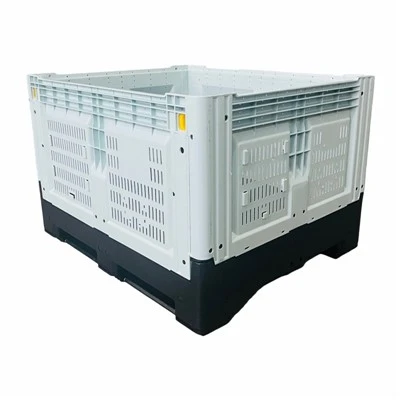
Understanding Stackable and Nestable Crates
Before we jump into the specifics of airplane cargo holds, let’s first understand the unique features of stackable and nestable crates. These crates are designed with a dual – functionality in mind. When they are being used for transporting goods, they can be stacked on top of each other. This stacking ability maximizes storage space in warehouses, on trucks, and potentially in plane cargo holds. The design typically includes interlocking mechanisms or stable bases that allow one crate to sit securely on another, reducing the risk of movement during transit.
On the other hand, when these crates are not in use, they can be nested inside one another. Nesting significantly reduces the overall volume of the crates, making storage more efficient and cost – effective. This is particularly beneficial for businesses that need to transport empty crates back or store them in limited spaces.
The Requirements of a Plane Cargo Hold
Airplane cargo holds operate under a set of strict standards and requirements. These are put in place for the safety of the aircraft, its crew, and the other cargo. The key factors that influence whether stackable and nestable crates can be used in a plane cargo hold include weight, stability, size, and compatibility with the cargo hold’s infrastructure.
First and foremost, weight is of utmost importance. Airlines have strict weight limits for each cargo hold and for individual items. The stackable and nestable crates, both when empty and when loaded, need to comply with these weight restrictions. Our crates are made from high – quality, lightweight yet durable materials. This ensures that even when they are stacked several layers high, the combined weight is within the acceptable limits.
Stability is another critical factor. During flight, the cargo is subjected to various forces, including vibration, turbulence, and acceleration. The crates must be able to maintain their stacked position securely to prevent shifting. Our stackable and nestable crates are engineered with a stable and balanced design. The interlocking features ensure that the crates are tightly connected, reducing the risk of movement during the flight.
The size of the crates also matters. Airplane cargo holds come in different shapes and sizes, and the crates need to fit efficiently within the available space. Our crates are designed in standard sizes that are commonly compatible with the dimensions of most commercial airplane cargo holds. This allows for easy loading and unloading operations, as well as maximizing the use of the available space.
Structural Integrity of the Crates
One might wonder if the repeated stacking and nesting operations could affect the structural integrity of the crates, especially when used in the demanding environment of a plane cargo hold. Our crates are made from premium materials, such as high – density polyethylene (HDPE) or reinforced plastics. These materials are known for their excellent strength – to – weight ratio and resistance to wear and tear.
We conduct rigorous quality control tests on our crates. They are tested for stacking strength, impact resistance, and durability. For example, we simulate the weight and pressure that the crates would experience when stacked several layers high in a cargo hold. We also subject the crates to impact tests to ensure that they can withstand the normal handling during loading and unloading operations. After these extensive tests, we can confidently say that our crates maintain their structural integrity under the conditions of a plane cargo hold.
Certification and Compliance
When it comes to using stackable and nestable crates in a plane cargo hold, certification and compliance are non – negotiable. Airlines require that all cargo and its packaging meet the relevant safety and regulatory standards. Our crates are compliant with the International Air Transport Association (IATA) regulations, which set the global standards for air cargo operations.
We work closely with independent testing agencies to ensure that our crates meet or exceed these stringent requirements. The certification process involves thorough inspections of the design, materials, and manufacturing processes. Once our crates are certified, we can provide our customers with the necessary documentation, giving them peace of mind when using our products for air freight.
Practical Considerations for Loading and Unloading
In addition to the technical aspects, there are practical considerations for loading and unloading stackable and nestable crates in a plane cargo hold. Our crates are designed with ease of handling in mind. They have smooth surfaces and ergonomic handles, which make them easy to grip and move.
During the loading process, the crates can be stacked in a systematic way to ensure maximum space utilization. The stable design of the crates allows for efficient stacking, and the interlocking features help to secure the stack. When it comes to unloading, the crates can be easily separated, and if necessary, nested for return transport.
Cost – Effectiveness
Using stackable and nestable crates in a plane cargo hold can also be a cost – effective solution. The ability to stack the crates means that more goods can be transported in a single flight, reducing the number of flights required for a given volume of cargo. This can lead to significant savings in transportation costs.
Moreover, the nesting feature of the crates reduces the cost of storing and transporting empty crates. Instead of taking up a large amount of space, the empty crates can be nested together, reducing the overall volume and potentially the shipping cost for returning them.
Conclusion

In conclusion, stackable and nestable crates are indeed stackable in a plane cargo hold. Our crates are designed, tested, and certified to meet the strict requirements of air freight. They offer a combination of strength, stability, size – compatibility, and cost – effectiveness. Whether you are a business looking to optimize your air cargo operations or a logistics provider seeking reliable packaging solutions, our stackable and nestable crates are an excellent choice.
Plastic Pallets If you are interested in learning more about our products or would like to discuss a potential procurement, please feel free to reach out to us. We are more than happy to provide you with detailed information, samples, and pricing. Let’s work together to find the best solution for your air cargo needs.
References
- International Air Transport Association (IATA) Cargo Regulations Handbook
- ASTM International standards related to plastic crates
- Industry research reports on air cargo packaging solutions
Ningbo Simple Trading Co., Ltd.
Ningbo Simple Trading Co., Ltd. is one of the most professional stackable and nestable crates manufacturers and suppliers in China. With a professional production team, we are able to meet the needs of the majority of our customers. Please feel free to wholesale custom made stackable and nestable crates from our factory.
Address: Room 3136, North Building of Yinzhou Chamber of Commerce Building, No.1299, Yinxian Boulevard, Shounan Subdistrict, Yinzhou District, Ningbo City, Zhejiang Province
E-mail: Simpleexport@nbsimpletrading.com
WebSite: https://www.logisticsequipments.com/
