Can Host Cell Residual Protein Detection Kits be used for extracellular residual protein detection? Host Cell Residual Protein Detection Kits
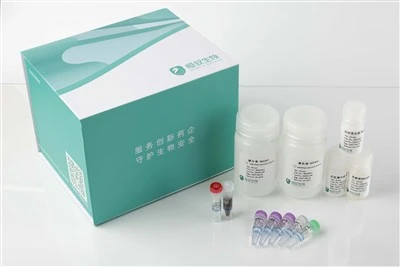
As a supplier of Host Cell Residual Protein Detection Kits, I often encounter inquiries from customers regarding the versatility of our kits, particularly about whether they can be employed for extracellular residual protein detection. This topic is not only crucial for the quality control and safety assurance of biopharmaceutical products but also has far – reaching implications for research and development processes in the biotechnology industry. In this blog post, I will delve into this question, exploring the scientific basis, practical applications, and limitations of using our Host Cell Residual Protein Detection Kits for extracellular residual protein detection.
Understanding Host Cell Residual Proteins and Extracellular Residual Proteins
Before we discuss the applicability of our kits, it is essential to understand the nature of host cell residual proteins (HCRPs) and extracellular residual proteins. HCRPs are proteins that remain in a biopharmaceutical product after the purification process. These proteins are derived from the host cells used in the production of recombinant proteins, such as Chinese Hamster Ovary (CHO) cells, Escherichia coli, or yeast. HCRPs can pose risks to patients, including immunogenicity and potential interference with the efficacy of the therapeutic protein. Therefore, accurate detection and quantification of HCRPs are critical steps in ensuring the quality and safety of biopharmaceutical products.
On the other hand, extracellular residual proteins refer to proteins that are present in the extracellular environment, such as the culture medium or the supernatant of a cell culture. These proteins can be secreted by the host cells during the production process or can be contaminants from the culture medium. Similar to HCRPs, extracellular residual proteins need to be monitored and controlled to avoid potential negative impacts on the final product.
Scientific Basis for Using Host Cell Residual Protein Detection Kits for Extracellular Residual Protein Detection
Our Host Cell Residual Protein Detection Kits are designed to specifically detect and quantify HCRPs in biopharmaceutical samples. The underlying principle of these kits is based on immunological methods, such as enzyme – linked immunosorbent assay (ELISA). The kits contain antibodies that are highly specific to the HCRPs of the corresponding host cells.
In the context of extracellular residual protein detection, there is a significant overlap between the HCRPs and extracellular residual proteins. Many of the proteins secreted by the host cells into the extracellular environment are also HCRPs. For example, when CHO cells are used for recombinant protein production, some of the endogenous CHO proteins are secreted into the culture medium. Our kits, which are optimized for detecting CHO HCRPs, can also recognize these secreted proteins in the extracellular environment.
The key advantage of our kits is their high sensitivity and specificity. The antibodies used in the kits have been carefully selected and validated to ensure minimal cross – reactivity with other proteins. This means that they can accurately detect and quantify the target extracellular residual proteins, even in complex matrices such as cell culture supernatants.
Practical Applications in the Biotechnology Industry
In the biopharmaceutical industry, the use of our Host Cell Residual Protein Detection Kits for extracellular residual protein detection offers several practical benefits.
Quality Control during Cell Culture
During the cell culture process, monitoring the extracellular residual protein levels can provide valuable information about the health and productivity of the host cells. Abnormal levels of extracellular residual proteins may indicate cell stress, contamination, or inefficient protein production. By regularly using our kits to analyze the culture supernatant, manufacturers can detect and address these issues in a timely manner, ensuring the consistency and quality of the final product.
Process Development and Optimization
Our kits are also invaluable tools for process development and optimization. By analyzing the extracellular residual proteins at different stages of the production process, researchers can identify the key factors that affect protein secretion and purification. For example, they can determine the optimal culture conditions, such as temperature, pH, and nutrient composition, to minimize the secretion of unwanted extracellular residual proteins. Additionally, the data obtained from our kits can be used to optimize the purification process, ensuring that the final product is free from high levels of HCRPs and extracellular residual proteins.
Limitations and Considerations
While our Host Cell Residual Protein Detection Kits can be used for extracellular residual protein detection, there are some limitations and considerations that need to be taken into account.
Matrix Effects
The extracellular environment, such as the cell culture medium, is a complex matrix that contains various components, including salts, amino acids, and growth factors. These components can potentially interfere with the performance of the detection kits, leading to inaccurate results. To overcome this issue, appropriate sample pretreatment methods, such as dilution or filtration, may be required to minimize the matrix effects.
Specificity
Although our kits are highly specific to the HCRPs of the corresponding host cells, there may be some extracellular residual proteins that are not recognized by the antibodies in the kits. For example, if there are contaminants from other sources in the extracellular environment, our kits may not be able to detect them. In such cases, additional detection methods, such as mass spectrometry, may be necessary to provide a comprehensive analysis of the extracellular residual proteins.
Conclusion

In conclusion, our Host Cell Residual Protein Detection Kits can be effectively used for extracellular residual protein detection. The scientific basis, practical applications, and established reputation in the industry all support their suitability for this purpose. However, it is important to be aware of the limitations and take appropriate measures to ensure accurate and reliable results.
Safety Detection Kits If you are involved in the biopharmaceutical industry and are looking for a reliable solution for extracellular residual protein detection, our Host Cell Residual Protein Detection Kits are an excellent choice. We are committed to providing high – quality products and professional technical support to meet your specific needs. If you are interested in learning more about our kits or would like to discuss a potential purchase, please feel free to reach out to us for a detailed consultation.
References
- Shukla AA, Hubbard B, Tressel T, Guhan S, Low D. Downstream processing of monoclonal antibodies – application of platform approaches. J Chromatogr B Analyt Technol Biomed Life Sci. 2007;848(2):28 – 39.
- Liu H, Cai Z, Zhang Y. Advances in the detection of host – cell proteins in biopharmaceutical production. Biotechnol Adv. 2015;33(7):1441 – 1450.
- Ghaderi D, Taylor RE, Padler – Karavani V, et al. Immunogenicity of therapeutic glycoproteins: role of glycosylation. Curr Opin Struct Biol. 2012;22(5):668 – 676.
HyQure Biotech Co., Ltd.
As a professional host cell residual protein detection kits enterprise in China and Switzerland, we rely on international compliance standards, leverages excellent quality and technical strength. If you have any enquiry about cooperation, please feel free to email us.
Address: Building 18, Lane 2777 East Jinxiu Road, Pudong New Area, Shanghai 2.Stücki Park Hochbergerstr. 60 I, 4057 Basel Switzerland
E-mail: service@hyqure.com
WebSite: https://www.hyqure.com/
