Alright, let’s cut to the chase: if you’re a fabricator, mechanic, or anyone who’s ever stayed up way too late troubleshooting a job that went sideways because of fasteners, you’ve probably stared at a bin of Guy Hardware bolts thinking, “Does this shiny (or dull, or scuffed) finish actually matter?” As a Guy Hardware supplier with 12 years under my belt—my hands still have the scratch scars from sorting Grade 8s in my first summer—I can tell you this isn’t some marketing fluff. The finish on our fasteners doesn’t just make them look pretty; it’s the first line of defense for how they perform on your jobsite. Let’s break this down like we’re hanging out in our warehouse after a long shift, no stuffy textbook jargon required. Guy Hardware
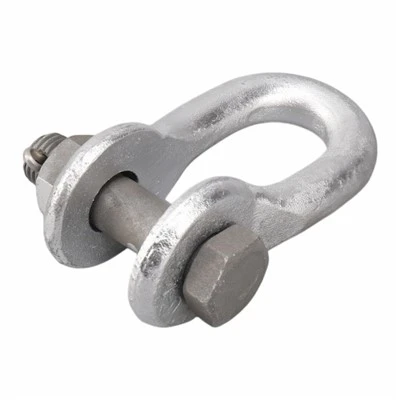
First off, let’s stop mixing up “finish” and “coating” for a sec. Yeah, people use the terms interchangeably, but when we talk about Guy Hardware’s finishes, we’re talking about the surface treatment that gets applied post-forging, right? It’s not just a wax job—it’s a layer that changes how the metal interacts with its environment and the parts it’s clamping together. Let’s start with the basics of performance here: what do we mean by “performance”? For most of our customers, that’s two big things: 1) Does this fastener hold up when we torque it down (no snapping, no stripping, no working loose mid-job), and 2) Does it last as long as the project we’re using it on? If you’re building a truck that’ll drive through salted roads in winter, that’s a different performance bar than a deck in your backyard. Guy Hardware’s finishes are tailored to that, and I’ve seen way too many guys grab a random bin of bolts from a big box store just because they look clean, only to have them seize up halfway through a critical assembly.
Let’s start with the most common finish we sell: zinc plating. That’s the dull, silvery gray stuff you see on 90% of the hardware at big hardware stores, and for good reason—it’s budget-friendly, but most people don’t realize there are two types of zinc we use at Guy Hardware. The first is electroplated zinc, which is super thin (like, 5-10 microns thin) and gets deposited in a bath of zinc solution. Think of it like slathering a thin layer of protective wax on your car—enough to fight minor rust, but not much else. The other is hot-dip galvanized (HDG) zinc, which is a thicker coat (50-85 microns) made by dipping the whole bolt into molten zinc. Now, here’s where performance gets interesting: I had a guy come in last spring, furious, saying he used our electroplated zinc bolts to attach a truck camper rack, and three months later they were so rusted he couldn’t loosen them. Turned out he was using them for a permanent outdoor application—electroplated zinc’s thin layer scratches and chips easily if you’re rubbing it against metal, like when you’re tightening it with a wrench, and once the zinc is gone, the base steel starts rusting. But if that same guy had used our HDG bolts for that camper rack, he would’ve been fine—thicker zinc means it’s more resistant to chipping, better for outdoor, corrosive environments. I’ve had contractors use HDG from Guy Hardware on highway guardrail repairs that are still holding strong 10 years later, no issues.
Wait, but what about torque? That’s a huge performance point. I see so many guys over-torqueing bolts because they think “shinier is stronger,” but that’s a myth. Take our black oxide finish—those matte black bolts you see on automotive parts. Black oxide is a conversion coating, not a plated layer, so it’s like turning the outer layer of steel black instead of adding a separate metal. I had a mechanic friend who swears by Guy Hardware’s black oxide bolts for engine builds, and here’s why: their coefficient of friction (that’s the fancy term for how two surfaces slide against each other) is super consistent. When you torque a bolt, you’re not just stretching the shank—you’re also fighting friction between the threads and the underside of the head. If the friction is all over the place, you’ll either under-torque and have the part work loose, or over-torque and snap the bolt before it’s tight enough. With black oxide from Guy Hardware, that friction is consistent every single time, which means you get accurate torque readings without guessing. I’ve seen a guy snap three competitor bolts on an engine rebuild because their finish was uneven, then switch to Guy Hardware black oxide and get the job done on the first try. No joke—he bought a case just because of that.
Now, let’s talk about the fancy stuff: our yellow zinc and zinc-nickel finishes. These are for when corrosion is super brutal—like, saltwater environments, industrial farms, or places that use road salt. I had a customer last year who installs marina docks, and he was using our standard zinc bolts that lasted two years, then switching to yellow zinc from Guy Hardware that’s been going strong for five. Yellow zinc is just electroplated zinc with a chromate sealant added (that’s why it’s yellow), which closes up tiny gaps in the zinc layer that would let moisture in. Zinc-nickel is even thicker—up to 15% nickel in the coat, so it’s way more resistant to corrosion than regular zinc. We use zinc-nickel for bolts that go on offshore wind turbine parts, and those things don’t even budge after years of salt spray. The performance here is all about longevity—no one wants to replace a bolt on a $10,000 dock because it rusted in two.
But wait, there’s a catch I need to warn you about: finishes can mess with torque if you don’t pay attention to them. For example, if you take a galvanized bolt and paint over it, the paint adds a slippery layer, so when you torque it, it stretches more than you expect—you might think it’s tight, but it’s actually not holding as well. Or if you have a finish that’s too smooth, like some polished bolts, the friction is really low, so you have to be extra careful not to over-torque them. We always print torque specs on our Guy Hardware bins, but those specs are specific to each finish—so if you grab a bin of black oxide and a bin of zinc-nickel, don’t use the same torque number for both. I’ve had a customer call me panicking last month saying a bunch of his fasteners snapped mid-install, and it turned out he used the zinc torque specs on black oxide bolts. Oops. That’s the kind of misstep that makes you realize finish isn’t just about looks—it’s about doing your homework.
Another thing I see a lot is people thinking the shinyest finish is the strongest. That’s a total myth. The strength of a fastener comes from the grade of steel, not the finish. A Grade 5 electroplated zinc bolt from Guy Hardware is just as strong as a Grade 5 yellow zinc bolt—their tensile strength is the same. The finish is just adding that extra layer of corrosion resistance and consistent torque. I used to sell a ton of stainless steel bolts to people who thought they were indestructible, and while they are rust-resistant, their finish is way more expensive than needed for most jobs. Unless you’re working in a super corrosive environment, Guy Hardware’s carbon steel bolts with the right finish will perform just as well, if not better, than stainless, and they’re way easier to work with (stainless can seize up tight if you don’t use anti-seize, for example).
Let me share a personal story to drive this home. Back in 2017, I had a buddy who owned a construction company, and he used a cheap, unbranded bin of bolts for a bridge repair job. The bolts were silver plated, looked fine, but they were actually coated with a thin layer of cadmium (which we stopped using at Guy Hardware years ago because it’s toxic) that wore off in six months. By 2019, half the bolts were rusted so bad they had to replace the entire section of the bridge—cost him $80,000. He switched all his business to Guy Hardware that week, and now he only buys our HDG and yellow zinc bolts for all his outdoor projects. That’s the kind of real-world performance that finishes deliver—one bad choice can cost you way more than paying a few extra cents per bolt for the right finish.
So, what’s the takeaway here? The finish of Guy Hardware fasteners doesn’t just affect how they look on your project—it affects their corrosion resistance, their torque consistency, their longevity, and how much stress they can handle without snapping. It’s not a “one size fits all” thing, either. If you’re doing a backyard deck, our electroplated zinc is perfect—cheap, works great for a dry, mild environment. If you’re building a saltwater boat lift, go with zinc-nickel. If you’re rebuilding an engine, black oxide is your guy for consistent torque.
At the end of the day, I’m not just a supplier—I’m a fellow tradesman who’s spent enough hours on jobsites to know that the tiny stuff (like a bolt finish) makes all the difference. If you’re tired of fasteners that seize up, snap, or rust before their time, hit us up to chat about what you’re working on. We can help you pick the right finish for your project so you don’t have to pull all-nighters replacing broken bolts. No pressure, just real advice from someone who’s seen it all.
Power Fittings References:
- "Fastener Coatings and Their Performance Characteristics," Fastener Technology International, 2021.
- Corrosion Resistance of Zinc and Zinc Alloy Coatings for Fasteners, American Society of Mechanical Engineers (ASME) B106.1M-2019.
- "Torque-Tension Relationships for Coated and Uncoated Fasteners," Journal of Construction Metalics, Vol. 18, No. 2, 2018.
- Galvanic Corrosion Prevention for Exterior Fasteners, International Code Council (ICC) Evaluation Service, 2020.
Hebei Tongchuang Power Fittings Co., Ltd.
With abundant experience, we are one of the most professional guy hardware manufacturers and suppliers in China. Please feel free to buy advanced guy hardware for sale here from our factory. Good service and quality products are available.
Address: Houxiaohan Industrial Zone, Xingbieying Town, Hejian City, Hebei Province, P.R. China
E-mail: tongchuangepf@gmail.com
WebSite: https://www.tongchuangpower.com/
