Hey there! Let’s cut to the chase—if you’ve ever stared at that random, awkward corner in your living room (or guest room, den, whatever space you’re using) and thought, “This spot’s just wasted potential,” you’re not alone. As a functional sofa supplier, I’ve heard this question a hundred times: how do you actually arrange a corner functional sofa so it doesn’t feel like you just jammed a big piece of furniture into a weird nook? It’s not just about fitting—it’s about making that corner work for you, looking good, and actually being usable. No fancy interior design degree required, I promise. Functional Sofa
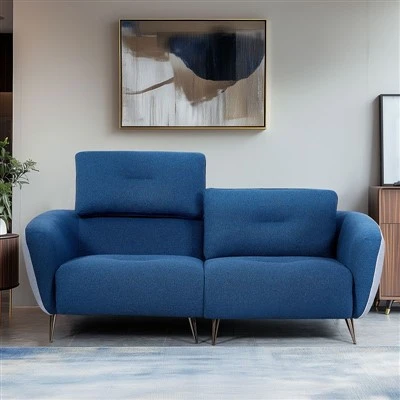
First off, let’s get one thing straight: not all corner sofas are made the same. I see so many clients pick a corner unit just because it “fits the space” without thinking about their daily routine, and that’s where the mess starts. Like, if you’re a Netflix-and-chill person who uses their sofa for midday naps, a basic corner sectional with fixed cushions is useless. You need one with a pull-out bed or a recliner, right? But before you even pick the sofa, you have to measure the corner and the flow of the room. Trust me, I’ve seen people buy a 90-inch corner sofa for a 10-foot-wide living room, and then they can’t even open the front door. That’s a headache no one needs.
Wait, let’s talk measurements first—this is non-negotiable. I know measuring is boring, but it’s the foundation. Grab your phone (or a tape measure, duh) and do this: first, measure the two walls that form the corner. Let’s say your corner is where the living room wall meets the dining room wall—write down the length of each. Then, don’t forget to account for the sofa’s overhang! A lot of functional sofas have extended parts for recliners, pull-out storage, or even a drop-down table. So if your corner walls are each 10 feet, a standard corner sofa might be 9 feet total (4.5 feet on each wall), but if it’s a corner sofa with a left-arm recliner, that recliner could stick out another foot. So you need to leave at least 3 feet of open space in front of the sofa for people to walk around—yes, even the dog. If you skimp here, you’ll be tripping over the sofa every time you grab a soda from the fridge. I once had a customer send me a pic of their new corner sofa shoved so tight against the dining table you couldn’t pull out a chair—they had to return it because it blocked the whole room. Oops.
Next, think about the room’s purpose. Is this the main living area for movie nights, or a cozy nook for reading and working? That changes everything. If it’s a main family room, you want the corner sofa to be the focal point, so arrange it so it’s facing the TV (obviously) but not so far away that you’re straining your eyes. Usually, 8 to 10 feet between the sofa and TV is perfect—enough for a cinematic feel, not enough to make you squint. But if the corner is in a small home office that doubles as a guest room, you might want to tuck the corner sofa so that one end is near your desk for extra seating when you have friends over, and the other end can pull out into a bed for guests. I sold a corner modular sofa last month that’s built exactly for that—one side has a storage ottoman for office supplies, the other pulls out into a queen bed. The customer said it turned their tiny studio apartment from “weird single room” into “functional space that doesn’t feel cluttered.” Win.
Now, the big part: arranging the sofa with the room’s other stuff, not against it. A lot of people treat the corner sofa like it’s a solo piece, but no—you have to pair it with other furniture to make it feel balanced. Let’s say your corner is between the living room’s main entry and a window. Don’t push the sofa all the way into the corner so it’s touching both walls—leave 6 to 12 inches of space there! That lets air circulate (especially if you have nice window treatments) and makes the room feel less cramped. Also, if you have a coffee table, don’t stick it dead center between the corner sofa and the TV. Wait, corner sofas usually have two seating sides—so a small coffee table in the middle of the “L” is good, but if your sofa has an extended side, maybe a side table on the end of that extended part for drinks or your laptop. Oh, and lighting! No one wants to sit on a corner sofa in the dark. If the corner is next to a window, great—add a floor lamp in the open space next to the sofa, not in the middle of the walkway. I always tell my clients: functional means both usable and not dark when you’re trying to read.
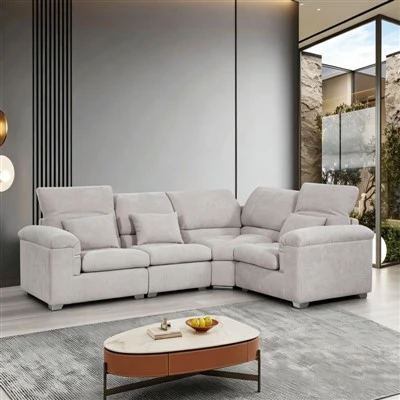
Wait, what if the corner is really awkward? Like, it’s not a right angle—maybe one wall is longer, or it’s a bay window corner? That’s where modular corner sofas are a game-changer. You can rearrange the pieces to fit the exact angle, instead of forcing a one-size-fits-all sectional. For example, if you have a bay window that juts out at a 120-degree angle instead of 90, you can pick a modular corner unit that has a custom corner piece to fit that. I had a customer with a super lopsided corner in their basement—they bought three separate modular pieces, arranged two along the longer wall, one in the bay, and it looked like it was made just for that space. No gaps, no awkward spots to step over. Pro tip: if you go modular, leave a little extra space between the pieces if you have functional features like recliners—you don’t want two reclining seats hitting each other when you put them back.
Don’t forget about storage! This is why my functional sofas are different from regular ones, right? A lot of corner sofas come with hidden storage under the seat cushions, which is perfect for blankets, throw pillows, even board games. When arranging it, make sure the side with the storage is facing where you need easy access. If you’re using the sofa in the living room, the storage side can face the wall behind it, so you don’t see the lids, but if it’s in a guest room, face the storage side toward the door so you can grab extra linens without moving the whole sofa. I once helped a client set up a corner sofa in their playroom—they put the storage side facing the back wall, and now they keep all the toy bins under there, so the playroom doesn’t look like a disaster zone. Genius.
Now, common mistakes I see all the time, let’s address them. First, overcrowding the corner. You don’t need a side chair, a bookshelf, and a plant all next to the corner sofa. If the space is tight, keep it simple—maybe one small side table and a floor lamp. Second, ignoring the door swing. If your bedroom door opens toward the corner, don’t put the sofa right in the door’s path. That’s just annoying, and you’ll end up scraping the wall every time you open the door. Third, picking the wrong color. Wait, functional sofas are about durability too, right? If you have kids or pets, a dark, stain-resistant fabric is way better than white, no matter how much you love the way it looks. I always tell customers to test the fabric samples in their room light—what looks gray in the store might look blue in your living room, and that’ll throw off the whole arrangement.
Wait, let’s do a quick real example. Let’s say you have a 12×10 foot living room, corner where the 12-foot wall meets the 10-foot wall, TV mounted on the 12-foot wall. Here’s how to arrange a corner functional sofa: Measure each wall—12 feet and 10 feet, so a corner sofa that’s 6 feet on the 12-foot wall and 5 feet on the 10-foot wall (total 11 feet, leaving 1 foot on each wall for walking space) would work. Add 3 feet in front of the sofa for walking to the entry door and kitchen. Put a small round coffee table in the middle of the sofa’s “L” (no square tables—they take up more space). Add a slim side table on the end of the 5-foot wall, with a tiny lamp. Leave the rest of the space near the TV for a small bookshelf or a media console. No clutter, everything works, and the corner feels intentional instead of wasted.
And here’s the thing: arranging a corner functional sofa isn’t about making it look like a magazine spread (though it can!). It’s about making that corner work for your life. If you love hosting, get a sofa that has extra seating that pops out. If you work from home, get one that lets you prop your laptop on the armrest. If you have a small space, get a modular one that can be rearranged when you need more room. I’ve sold so many of these, and the best part is when a customer sends me a pic of their space and says, “I never thought this corner could be my favorite spot in the house.”
If you’re in the market for a corner functional sofa, or you’re stuck on arranging the one you already have, hit us up to chat through it. We can talk through your space, your needs, and make sure you get something that fits your corner, not the other way around. No pressure, no salesy junk—just real talk about making your space work for you.
L-Shaped Sofa References
- Interior Design Foundation Guidelines: Space Planning for Residential Interiors (2022)
- Functional Furniture Trends: Balancing Form and Utility in Modern Living Spaces (2023)
- Small Space Arrangement Best Practices: Maximizing Corner Functionality (2021)
Huizhou Ramson Technology Co., Ltd.
Huizhou Ramson Technology Co., Ltd. is one of the most professional functional sofa manufacturers and suppliers in China, also supports customized service with low price. Please feel free to wholesale bulk classy functional sofa from our factory. Contact us for pricelist.
Address: Building 3-4, Changlonggang Industrial Park, Tiantou Village, Shatian Town, Huiyang District, Huizhou City, Guangdong Province
E-mail: jscsofa@jsc-furniture.com
WebSite: https://www.jsc-sofa.com/
